
No One Has Ever Crossed Antarctica Unsupported. Two Men Are Trying Right Now.

PUNTA ARENAS, Chile — A weather window opened on Halloween morning, the typical stiff winds and polar fog relenting, and the flight to Antarctica was cleared for takeoff.
For nearly a week, Colin O’Brady, a 33-year-old American adventure athlete, and British Army Captain Louis Rudd, 49, had been waiting in Punta Arenas, Chile, on the Strait of Magellan, near the shattered end of the South American continent.
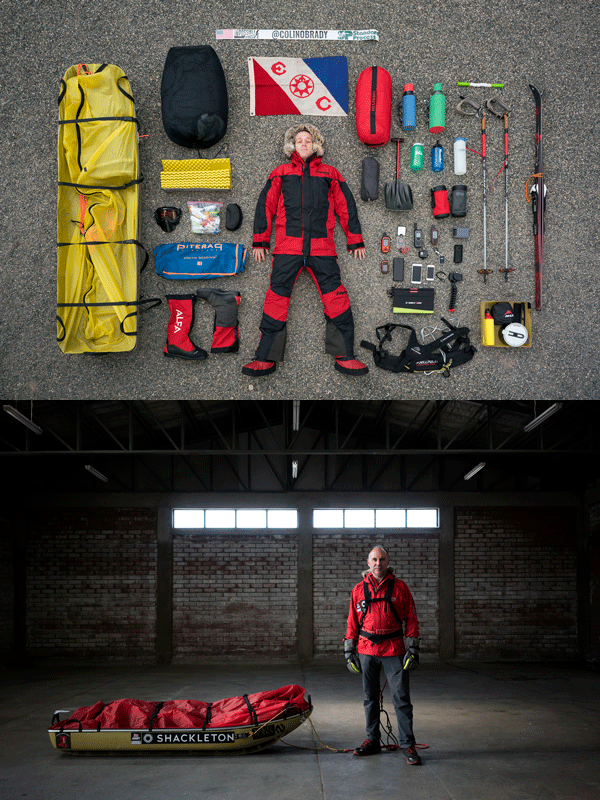
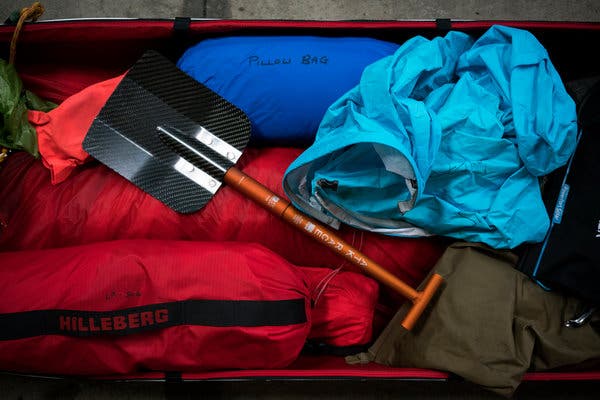
In separate buildings blocks away from one another, they had been immersed in similar tasks: weighing and re-bagging their freeze-dried provisions and sorting through polar-grade gear.
Their stashes included sleeping bags good for conditions up to minus 40 Fahrenheit, portable solar panels, cross-country skis, hand-held satellite phones and modems, and a GPS tracker programmed with way points to lead them step by frozen step across the highest, driest and by far the coldest continent on earth.
The two men, who came to this quest from very different backgrounds but forged a competitive bond during their time in Chile, were each determined to become the first person to cross Antarctica alone without support — a 921-mile odyssey on ice through blasting winds that could take as many as 65 days.
It’s a trek that killed a man two years ago.
How One Adventure Became Two
For much of this year, Rudd had been expecting a one-man battle against nature. Now his struggle has become a race.
Rudd announced in April that he would make the attempt. Then, in mid-October, with just weeks to spare, O’Brady, who had also been preparing for months, revealed on Instagram that he planned to do the same.
Both men hope to conquer a continent that has become the new Everest for extreme athletes, though they represent two vastly different approaches.
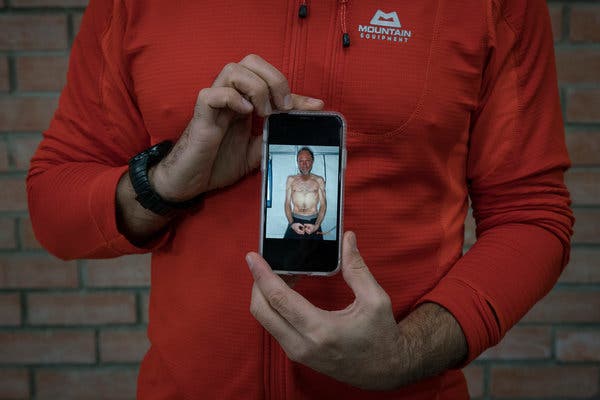
Rudd is more of an old-school adventurer. He enlisted in the Royal Marines at age 16 and remains in the British armed forces. He fought in Kosovo, Iraq (three tours) and Afghanistan (four tours).
“The way I’ll console myself on this expedition is to remind myself that nobody’s shooting at me,” Rudd deadpanned. “Obviously, Antarctica is dangerous in its own way, but I look at it as I’m extremely fortunate. I’ve had friends lose their limbs, eyes, real life-changing stuff.”
Rudd was introduced to polar exploration by another English soldier, Lt. Col. Henry Worsley, a distant relative of Frank Worsley, the captain of Ernest Shackleton’s ill-fated journey to Antarctica in the early 20th century. In 2012, Rudd and Worsley traced Roald Amundsen’s 920-mile journey to the South Pole.
Unlike the wounds of war, suffering in Antarctica, Rudd said, “is temporary.”
O’Brady is more of the age, a seasoned adventure athlete and budding social media star forged from injury and perseverance.
He grew up in Portland, Ore., and swam at Yale. While on a trip to Thailand in 2008, two years after graduating from college, he was in a freak accident that changed the course of his life.
His legs were burned so severely that doctors told O’Brady he would never walk normally again.
Eighteen months later, while living in Chicago and working in finance, he decided to push his limits and signed up for an Olympic distance triathlon. He won the amateur division.
O’Brady quit his day job, raced triathlons professionally for six years, and was on track for the Olympic trials. But he left the sport in 2014 to pursue the Explorers Grand Slam.
He climbed each of the “Seven Summits” (the highest peak on each continent) and skied the last degree to both poles in just 139 days in 2016, claiming a world record that he still holds. This summer, he climbed the high points in all 50 states in just 21 days, obliterating another record — to the delight of his social media followers.


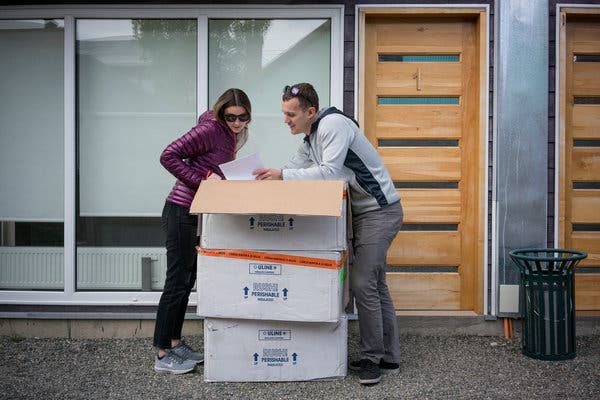
To prepare for the Antarctic trek, Rudd trained himself, putting in hours of powerlifting. Each night after working a full day at his British Army base, he would drag a giant truck tire along a riverbank for hours.
A professional trainer, Mike McCastle, put O’Brady through a similar powerlifting regimen at his gym in Portland. O’Brady gained 15 pounds of muscle for his attempt. In order to withstand the frigid elements, he held long planks with his hands and feet, plunged in buckets of ice water. He then untied knots while his fingers were still stiff and numb.
He calls his expedition “The Impossible First’’ and plans to show much of it on social media (Rudd’s presence there is minimal.)
“If I can’t, it’s not as fun for me,” O’Brady said. “I stand for breaking through barriers. I’m a big believer that we should uplift one another.” A TEDx Talk he delivered in Portland last year has been viewed 1.2 million times on YouTube.
921 Miles of Unbroken Snow and Ice
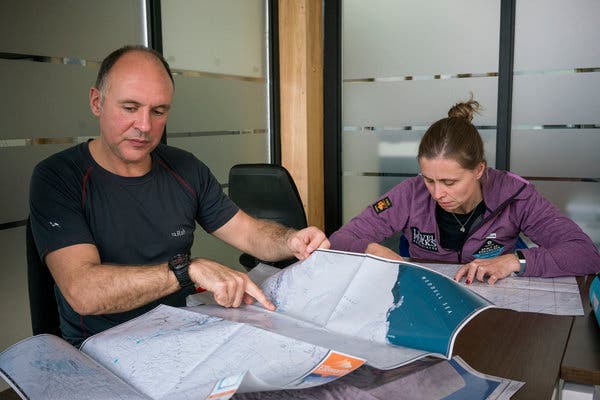
Although there was some initial tension between the adventurers, they agreed on a course beginning on the Ronne Ice Shelf, setting off on Nov. 3. From there, they planned to ski onto Messner Glacier in western Antarctica and climb into a crosswind from sea level toward the Thiel Mountains, which rise like dorsal fins above an otherwise unbroken sea of snow and ice.
A dogleg to the southeast brings them to a latitude line they will follow to the South Pole, climbing to an elevation of 9,301 feet. That journey alone is 651 miles. From there, they plan to descend Leverett Glacier and finish on the Ross Ice Shelf, some two months after setting out.
All the while, they will be dragging Nordic sleds, called pulks, to haul all of their food, cooking fuel and camping gear.
On Day 1, before using any supplies, their pulks weighed roughly 375 pounds. The men’s skis are covered in synthetic skins for better traction; working like glorified snowshoes, the skis help distribute weight in a way that avoids punching through deadly crevasses.
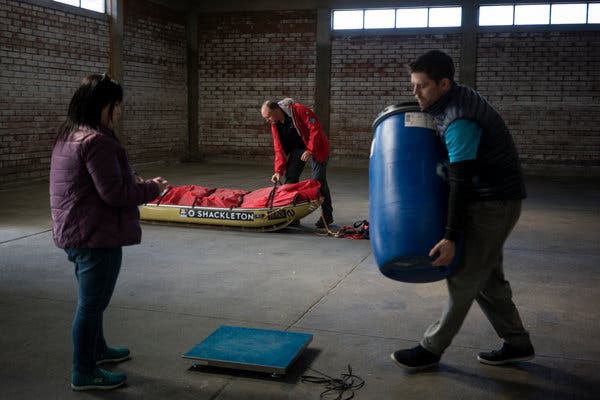

For their crossing to qualify as unsupported, the competitors cannot accept any help from the few humans they might encounter — not so much as a cup of tea from researchers at the renowned Amundsen-Scott South Pole Station as they pass by.
Though a handful of adventurers have used kites to ride the winds across the continent or arranged for caches of food and fuel to be dropped along the way, the accomplished English polar explorer Ben Saunders was the last to attempt a solo, unsupported crossing. He chose a different route and tapped out after covering 805 miles in 2017.
The year before, Rudd’s friend Worsley had made the same valiant attempt. He covered more than 900 miles but died from an infection two days after being rescued from the ice, just 126 miles from the finish line.
After Worsley died, Rudd fielded a six-man team of English soldiers to trace his journey, completing it for him in 2017. They held a memorial service at Worsley’s final campsite.
‘I Think We’re Both Going to Make It’
Antarctic firsts don’t come cheap. The cost is steep in cash and toil.
Rudd and O’Brady each raised upward of $200,000 from corporate sponsors and private donors to make their attempts.
Originally, their itinerary called for a Nov. 1 departure from Punta Arenas, but fair weather must be seized, so at 8:47 a.m. on Oct. 31, the competitors boarded an Ilyushin cargo jet operated by Antarctic Logistics & Expeditions, a charter company that regularly brings explorers to Antarctica. The destination was ALE’s base camp on Union Glacier.
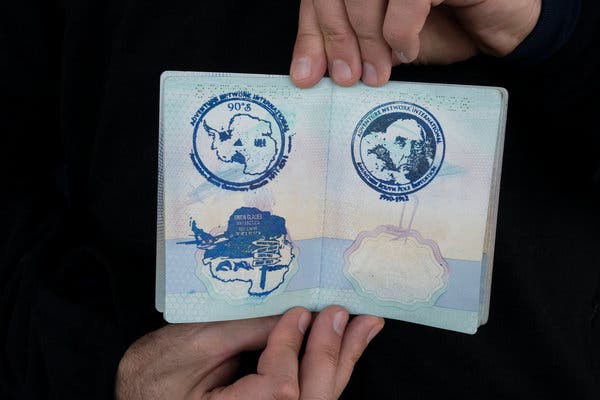

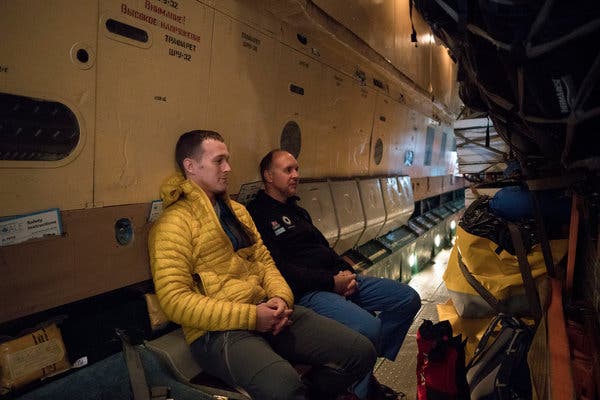
On their way to the airport that morning, Rudd was relaxed and chatty yet had some worries.
He had left his home in Hereford, England, on Oct. 26, the day after his wife, Lucy, had unexpected surgery. His 21-year old son was away with the army; his two daughters, ages 24 and 21, had tears in their eyes when he hugged them goodbye.
When the men first arrived in Punta Arenas, there was a lot of tension and distrust. For months, Rudd had thought he would be competing against the elements and himself, not a stud athlete. Then O’Brady made his surprise announcement.
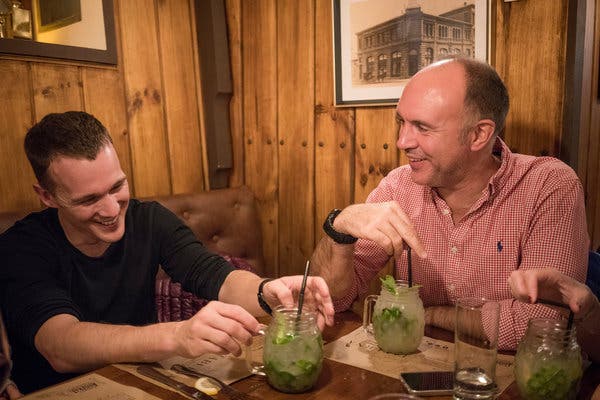
The two met for the first time in the cellar bar of Ernest Shackleton’s preferred hotel in southern Chile and bonded over a shared desire to suffer in the service of a grand adventure.
The thaw between them continued, and the day after they landed in Union Glacier, they agreed on a proper head-to-head battle.
At around noon on Nov. 3, Rudd and O’Brady boarded a Twin Otter ski plane that took off over Mount Rossman and banked east. After a 90-minute flight, they landed on the Ronne Ice Shelf.
O’Brady got out first and collected his gear. “Good luck,” Rudd told him, “I think we’re both going to make it.”
They hugged goodbye, likely their last human contact for at least two months. Then, while O’Brady strapped into his sled, the plane drove about a mile away to Rudd’s parallel starting point. (That means O’Brady technically had about a 10-minute head start, but it will likely prove negligible over such a long distance).
The Ronne Ice Shelf is 600-feet thick, floating in the ocean yet fused to shore. They began three miles away from their first way point and the beginning of the Antarctic continent. That’s where O’Brady set up camp, on the lip of the continent, after a three-hour haul.
The sky was still blue — there are 24 hours of daylight in the Antarctic summer — and it was a relatively balmy minus 25 Fahrenheit (minus 32 Celsius), without a trace of wind.
Despite the good weather, O’Brady was content to pace himself and build up to the longer days ahead. “Once you get in that rhythm or routine, that flow state starts to hit,” O’Brady said from his satellite phone.
But the weather will not always be so favorable. Temperatures can drop below minus 50 Fahrenheit (minus 45 Celsius), even in summer, and should a storm delay their progress and force them to remain in their tents for days, the competitors could run out of food.
Both men brought five days’ reserve, just in case.
Other dangers include hypothermia, frostbite and a chafing condition known as polar thigh. Infected wounds fester because the body heals more slowly in the cold.
Winds have been measured at up to nearly 60 miles per hour on the polar plateau, and if a strong gust carries away their tent, the journey will end right then.
Even milder winds can create whiteout conditions, when snow swirls and a polar fog can blot out the sky and whip the snow’s surface into sastrugi: wavelike speed bumps that can extend for miles and make hauling a heavy sled slow going. Both men have fallen in crevasses on other expeditions.
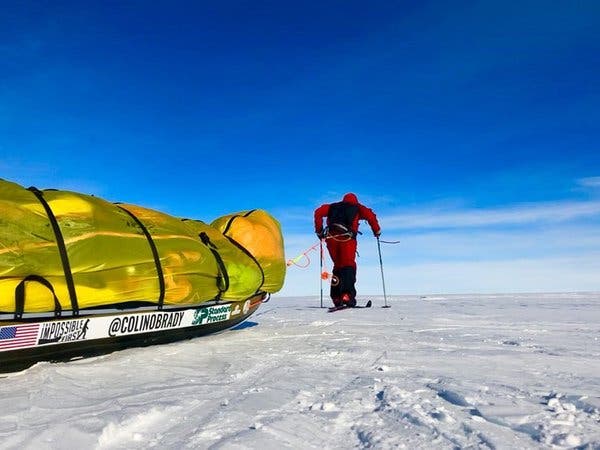
"To give some perspective on how hard I'm being tested out here, today was the first day that I haven't cried inside my goggles," O'Brady wrote with a picture that he posted to Instagram on the fourth day of his solo expedition across Antarctica.
Then again, perhaps their greatest threat will be one another.
With two competitors attempting the crossing at the same time, will they track each other’s progress too closely? Push themselves past the point of exhaustion into mortal danger?
On their first day, Rudd went a little harder than O’Brady and skied 4.6 miles to grab an early lead. He maintained that edge for the next few days, but in nearly whiteout conditions Thursday, when both men had to stare at compasses bracketed to their chests to stay on track, O’Brady marched 20 miles in 12 hours to catch Rudd. On Friday, again in whiteout conditions, he pushed past Rudd and grabbed his first lead.
Whoever wins, if successful, these two men will be forever linked in polar lore.
“People have been trying to do this for 100 years, and nobody has successfully done it yet,” O’Brady said. “And here are two guys both pushing each other to hopefully conquer an impossible feat.”

Related articles


Contributor To







Subscribe to my newsletter
Sign up for occasional updates on new stories, book releases, and behind-the-scenes writing insights - straight from Adam. No noise, just good writing.